Checking out the Applications of 3D Laser Scanning in Archaeology and Cultural Heritage Preservation
The integration of 3D laser scanning innovation in archaeology and social heritage preservation notes a considerable innovation in exactly how historical sites and artifacts are documented and analyzed. This non-invasive technique gives exact spatial data, disclosing elaborate details that were formerly hard to catch. As the applications of this modern technology remain to evolve, various effects for conservation, education, and documentation arise, inviting additional exploration into its transformative effect on the field.
Comprehending 3D Laser Scanning Innovation
3D laser scanning modern technology has actually transformed the field of archaeology by offering thorough and precise spatial information. This advanced innovation uses laser beams to record numerous data factors from a things or website, developing a highly accurate three-dimensional depiction (3D Scanning). The resulting point clouds can expose complex information of historical sites, structures, and artifacts that could be undetectable to the nude eye
Using this technology, archaeologists can document the precise dimensions, shapes, and settings of objects with unmatched precision. This technique minimizes the risk of human error and eliminates the demand for substantial hands-on dimensions. The data accumulated can be evaluated and shared easily, facilitating collaboration among scientists. By incorporating 3D laser scanning with GIS and various other digital devices, excavators enhance their ability to envision and translate historical contexts, resulting in deeper insights right into old societies and settings.
Enhancing Historical Documentation
3D laser scanning significantly boosts archaeological documentation through its capacity to create precise site maps. This innovation helps with thorough artefact analysis, offering understandings that traditional approaches may forget. Furthermore, it assures the conservation of contextual data, which is vital for understanding the relationships within historical sites.
Accurate Site Mapping
While standard mapping techniques frequently have problem with recording the elaborate details of historical sites, advanced laser scanning innovation provides an innovative strategy to exact website mapping. This approach enables archaeologists to produce very outlined and accurate three-dimensional representations of websites, showcasing topographical variations and architectural attributes with exceptional integrity. The ability to capture numerous data factors in a matter of mins enables for detailed documents, which can be easily upgraded and shared amongst researchers. Furthermore, laser scanning facilitates the dimension of intricate geometries that would be hard to analyze making use of conventional tools. Therefore, this modern technology boosts the precision of website maps, contributing substantially to the conservation and understanding of social heritage resources.
Detailed Artefact Analysis
Laser scanning modern technology significantly boosts the evaluation of historical artefacts, providing researchers with unmatched detail and accuracy. This technique records complex surface textures, dimensions, and features that standard documents strategies might forget. By producing high-resolution 3D models, scholars can very closely analyze artefacts without the danger of damage fundamental in physical handling. This precision permits better comparative studies, allowing experts to determine production strategies, stylistic variations, and potential social importance. The ability to control and imagine data in three measurements assists in a much deeper understanding of artefact capability and usage. Overall, laser scanning promotes an extra detailed technique to historical documents, ensuring that essential information about artefacts is maintained for future research study and education and learning.
Preservation of Contextual Data
Protecting contextual data is vital for boosting historical documents, as it guarantees that searchings for are comprehended within their initial environmental and social frameworks. 3D laser scanning innovation considerably adds to this preservation effort by catching detailed spatial connections among artifacts, frameworks, and their environments. By generating exact 3D versions, archaeologists can document the exact places and alignments of items in situ, assisting in a comprehensive understanding of their context. This innovation enables scientists to review and assess sites long after excavation, keeping the honesty of contextual info. Furthermore, digital records developed with scanning can be shared internationally, cultivating collaborative study and public involvement. Inevitably, maintaining contextual data with 3D laser scanning improves archaeological stories and promotes a much more profound gratitude of social heritage.
Preservation of Cultural Heritage Sites
As improvements in technology remain to develop, the conservation of social heritage websites has ended up being significantly reliant on cutting-edge approaches such as 3D laser scanning. This modern technology enables the comprehensive paperwork of artifacts, landscapes, and structures, capturing their exact measurements and spatial connections in a non-invasive manner. By developing high-resolution 3D models, researchers can keep an eye on and analyze damage patterns, allowing aggressive conservation approaches.
Furthermore, 3D laser scanning helps with the sharing of thorough site information with the international community, advertising partnership among historians, excavators, and conservationists. These designs function as important sources for education and learning and public involvement, increasing understanding of social heritage concerns. The electronic documents created can safeguard versus loss due to environmental factors, vandalism, or forget. On the whole, 3D laser scanning represents a transformative method to the conservation of social heritage, making certain that these sites can be studied and valued by future generations.

Restoration and Reconstruction Efforts
The in-depth documents accomplished with 3D laser scanning plays a significant function in remediation and reconstruction efforts within archaeology. This modern technology offers exact dimensions and high-resolution imagery, permitting accurate electronic versions of frameworks and artefacts. These models offer as crucial referrals throughout reconstruction processes, enabling archaeologists to envision the original design and make educated decisions concerning products and techniques needed for repair service.
In addition, 3D laser scanning assists in the repair of damaged or shed aspects by creating comprehensive replicas. This process help in guaranteeing that restorations keep historical honesty while likewise allowing for ingenious methods to recover sites. The capability to analyze wear patterns and structural weak points via checked information boosts understanding of a site's historical context and its use with time. 3D laser scanning not only protects the physical elements of social heritage however likewise improves the narrative of background, guiding future restoration undertakings.
Educational and Research Opportunities
The combination of 3D laser scanning in archaeology opens significant educational and research chances. Academic partnerships can improve the understanding of old websites, while click this link specialized training workshops equip professionals with essential abilities for utilizing this innovation. With each other, these campaigns cultivate a richer interaction with historical practices and methodologies.
Academic Collaborations in Archaeology
Joint initiatives in archaeology have actually come to be progressively crucial for progressing both educational and research study chances. By fostering collaborations among colleges, research study institutions, and cultural heritage organizations, these cooperations facilitate the exchange of understanding and resources, improving the high quality of archaeological researches. Joint tasks typically take advantage of varied competence, enabling extensive evaluations and ingenious methods, specifically in the application of modern technologies like 3D laser scanning. Such partnerships likewise advertise interdisciplinary methods, engaging areas such as background, conservation, and location scientific research. On top of that, academic collaborations frequently result in the growth of new educational programs and training programs, preparing the future generation of excavators to effectively utilize sophisticated innovations in their work. Ultimately, these partnerships add to the conservation and understanding of cultural Resources heritage.
Educating Workshops for Professionals
Training workshops for professionals in archaeology are significantly important for enhancing skills in the application of innovative modern technologies such as 3D laser scanning. These workshops provide participants with hands-on experience in using cutting-edge tools and software application, promoting a deeper understanding of data capture and analysis processes. Experts can discover to create accurate digital models of historical sites, which noticeably aid in paperwork and conservation efforts. In addition, these training sessions usually consist of conversations on best methods and study, promoting expertise exchange among individuals. By investing in continuous education and learning, specialists can stay upgraded on evolving innovations, eventually improving the effectiveness of their study and cultural heritage conservation efforts. This dedication to ability enhancement is crucial for advancing the field of archaeology.
Future Patterns in 3D Laser Scanning for Archaeology
As developments in modern technology remain to improve different fields, the future of 3D laser scanning in archaeology assures to boost both the precision and performance of website documentation and evaluation. Emerging trends suggest an expanding combination of expert system and device discovering, helping with automated data handling and interpretation. This development will certainly permit excavators to analyze complex datasets faster, bring about faster insights right into historic contexts.
In addition, the integration of drone modern technology with 3D laser scanning is likely to expand, allowing comprehensive airborne surveys of archaeological sites that are tough to gain access to. The raising price of scanning tools will certainly equalize gain access to, equipping smaller establishments and independent researchers to make use of these tools successfully. Additionally, developments in online reality and increased reality will certainly allow immersive experiences for public interaction and education and learning, making archaeological searchings for more interactive and easily accessible. These trends jointly signify a transformative future for archaeology, boosting conservation efforts and expanding the technique's outreach.
Regularly Asked Concerns
Just How Much Does 3D Laser Scanning Tools Price?

What Are the Limitations of 3D Laser Scanning?
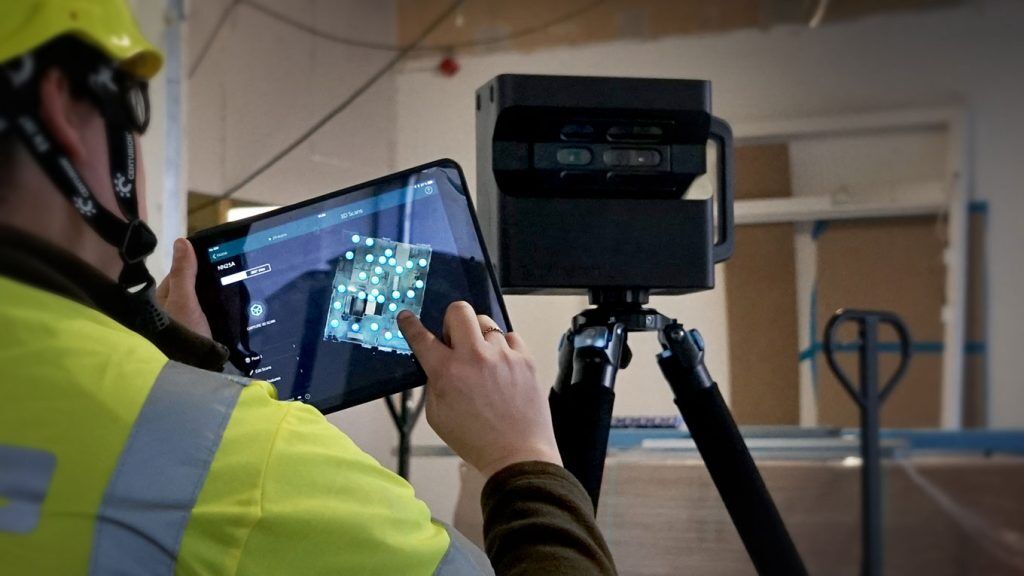
The restrictions of 3D laser scanning include high expenses, potential data processing obstacles, sensitivity to environmental conditions, and difficulty capturing intricate details in intricate surface areas, which can impact the precision and efficiency of checked representations. (3D Scanning)
Can 3D Laser Scanning Be Made Use Of Undersea?
Yes, 3D laser scanning can be used undersea, however it requires customized devices and methods to overcome challenges such as water distortion and minimal exposure. Effective applications have actually been shown in aquatic archaeology and underwater surveys.
Just how Lengthy Does a Scanning Project Typically Take?
A scanning task typically takes anywhere from a few days to numerous weeks, depending upon the intricacy and dimension of the area being scanned, together with the preparation and post-processing needs entailed in the task.
Exist Certain Software Program Needs for Handling 3D Scans?
Yes, specific software needs for refining 3D scans consist of programs with the ability of dealing with large factor clouds, such as Autodesk Wrap-up, Cyclone, or MeshLab. These devices promote evaluation, visualization, and integration into numerous applications effectively.
The integration of 3D laser scanning technology in archaeology and cultural heritage conservation marks a considerable development in exactly how historical sites and artefacts are documented and examined. 3D laser scanning innovation has reinvented the area of archaeology by providing exact and detailed spatial data. As advancements in technology continue to develop, the preservation of social heritage sites has actually come to be progressively dependent on cutting-edge approaches such as 3D laser scanning. As improvements in modern technology my response continue to reshape different fields, the future of 3D laser scanning in archaeology assures to enhance both the precision and effectiveness of site paperwork and evaluation. The assimilation of drone technology with 3D laser scanning is most likely to increase, making it possible for comprehensive airborne surveys of historical websites that are tough to access.